
I've wanted to write this post for a while now, but it's not the kind of post you can really write while you're in the middle of multiple years of being injured & not being able to train & DNF'ing and DNS'ing. Now that I've managed to cobble together something of a reasonably successful season, though, I feel like writing it finally makes at least some kind of sense.
For the first few years of my distance running "career," I didn't own a GPS watch & didn't race, so I honestly had no idea what my pace was. If I was going on a run of x miles, I had a vague idea of what to tell people regarding when I'd be back, but I really had no concept of whether I was running 7:00 miles or 12:00 miles. I even ran my first few races watchless, and although I did get my official finishing times, they didn't really mean anything to me and it never even occurred to me to go back and calculate my pace. (I was a sprinter in school and sprinters don't really talk in terms of pace, so it wasn't part of how I thought about running.)
The first time I can remember ever thinking about pace was when I started training for the Kaiser Permanente Half Marathon in fall of 2009. I would plot out my route using MapMyRun to find the distance, run with an old-school stopwatch, then do the math afterward. Even then the number didn't mean much to me. As I recall, at that point most of my easy training runs were somewhere in the 8:30-9:00 range, depending. I honestly had no idea what kind of race goal time was reasonable, but I sort of arbitrarily decided that trying to run under 100 minutes (so 1:40) sounded nice & round & calculated that I'd need to run about 7:38-7:40/mile to do it. (I ran 1:47:10, ~8:05 pace, in case you're curious. I overdressed and went out waaaay too fast & paid for it with an utterly miserable death march down the Great Highway & Back. SO MANY LESSONS!!)

lol what even is that outfit
(also, that dude behind me tho)
Kaiser '10 was an utterly miserable experience, so naturally, I immediately turned my thoughts towards another half and getting that completely arbitrary sub-1:40. Knowing really nothing more about training for distance races than what I'd learned from Hal Higdon, I concluded that duh, obviously, if you want to race fast, you darn well better start training faster. (Though to be fair to Hal, I should probably point out that he never said this. It just seemed obvious to me.)
I trained and trained and trained kinda sorta in retrospect really not that hard at all but it felt like a lot at the time, did get a good bit faster, watched my PRs drop like flies, nailed that elusive sub-1:40 no less than three times, and by summer 2014 was running my "easy" runs in the 8:00-8:15 range (basically, my goal marathon race pace). Some friends started calling me fast and comments admiring my speedy training paces occasionally dotted my Strava feed.
In a way I felt super baller but in other ways I was frustrated. I was mostly happy with my performance in shorter races, but never seemed to be able to translate those times into the marathon times on the same row in the pace chart (or even remotely close). Positive marathon splits were par for the course. Long runs made me feel like death, so I found excuses not to run so many (or didn't fight too hard to find the time), and every time I tried to sneak my average weekly mileage above the 40 mark for too long, I ended up hurt (whether shin splints or tendinitis or something a lot worse like a stress fracture or torn muscle).
In retrospect, it's hard to remember where or when I started to see or hear more about the wisdom of slowing down. Or, maybe it was always out there and I just didn't want to believe it. "That's not me, I can legitimately run those paces, not like people who try to race every workout." "Oh, those guidelines don't apply to me in the same way; I have a naturally high max heart rate." "No, really; this IS easy pace for me." It makes me cringe a little now but I remember a co-worker on my Ragnar(ish) team asking if I thought I could manage 10:00 miles and I swear to god I sniffed a little & said something about how if at any point I were running 10:00 miles it was because I had a broken leg.
{"Wow, you were a snooty bitch." Yes, but an OBLIVIOUS snooty bitch! That's better, right? No?}
So it's sort of fine and good to be snooty and hoity toity about how fast you run your training runs until you suddenly realize it's been nearly two years since you've run anything like a PR or even managed to string together a single successful training cycle. At that point you kind of have to take a hard look at what you're doing & ask if maybe, just maybe, it isn't all dumb luck and maybe all these experts and coaches and people who actually do this for a living know what they're talking about when they say things like "80% of competitive recreational runners are sabotaging their races by doing training runs too fast."
Probably one clue that this whole "go-slow-to-go-fast" deal wasn't complete bullshit was the sheer number of running/endurance sport experts out there recommending it. People talk about it different ways and the exact recommendations vary depending on who you're reading ("You should run xx% of heart rate reserve" "You should run x minutes per mile slower than your marathon race pace" "You should run easy enough that you can carry on a conversation in complete sentences") but the basic concept showed up over and over and over again. It's one thing if it's one fringe dude saying people should do something that sounds counter-intuitive, but when it's the majority of them, you should probably at least check it out and make an effort to make sense of the science.
So between fall 2014 and spring 2015, I decided I didn't have a whole lot left to lose & dove in.
I dug out my heart rate monitor and calculated my heart rate reserve. I took all the 'pace' fields off my watch, and for months and months and months did nothing but run for time, based on nothing but my heart rate and effort level. The recommendations, at first, seemed ludicrous--"There is no way I can run 10:30 miles for my easy runs, that's barely a shuffle." "OMG there is no way I can do easy runs at 142 bpm, that's like fast walking."--but then I'd think to myself, "Yeah, maybe, but what you're doing now doesn't really seem to be working, sooooo...????"

ca. 2011, ie, the bad old days of chest strap heart rate monitors
And little by little, it got easier. I discovered that yes, 10:00-10:30 pace was actually still running. And, what's more, if I wanted to keep my heart rate in the right range, I actually had to run more like 11:00 miles at first. o.O
(Then again, Phil Maffetone describes working with relatively fast runners whose aerobic base fitness was so bad that they had to actually start with walking fast in order to stay out of the anaerobic zone; at least things weren't that bad for me!)
A couple months back Cat gave me her copy of 80/20 Running by Matt Fitzgerald. I'd first learned about the book long after I was already sold on slowing down so had never sought it out, but decided I might as well give it a read. It was a lot of stuff I already knew, but also a ton more that I didn't!

Two bits I found particularly intriguing were:
1) If you ask a bunch of "recreationally serious" runners to run at their normal, comfortable training pace and then rate their level of effort on the Borg Scale (which goes from 6-20 for a dumb reason), the overwhelming majority will rate their level of effort right around 13, which the Borg Scale calls "somewhat hard."
2) If you ask just about any runner to run for a while at a comfortable pace with no access to GPS or other pace/speed information, they'll almost always end up running at about the same pace, AND if you explicitly ask them to start out slower, they'll still gravitate back toward their usual pace, whatever it is.
Ie, we are incredible creatures of habit, and we very quickly come to perceive our usual level of effort as "comfortable," even if when asked we describe that effort level as "somewhat hard."
Thinking back on my own experience, this wasn't at all surprising. Going from running 8:00-8:30 miles on my easy days to running 11:00s felt like crawling, and if I didn't pay close attention to my heart rate, I would very quickly find myself gravitating back towards those low 8:00's while my heart rate climbed through the roof.
Now, this is the part where people will often say things like "But you have to train fast to race fast!" and "Your body does what you train it to do!" and "You have to make your race pace feel normal!" and start yelling about the Specificity Principle. I know, friends. These things felt truthy to me too, once. And the reason they feel truthy is because they all do contain some element of truth. But not necessarily the way our brains intuitively want to apply them.
I won't repeat all the science here because many, many people who are actually experts in this stuff have already explained it far better than I can and I'm sure you know how to use Google. The bottom line is that there is science, quite a lot of it. When you're a relatively new runner (say in your first few years of actually putting some consistent work into it), it's easy to get faster. Most of us have so much room for improvement in so many areas that literally any amount or kind of running is going to make us faster. But once you've picked a lot of that low-hanging fruit, it's not uncommon for recreational runners to find ourselves plateauing. Then what?
Thanks to science, we do know for a fact now that running mostly slow, probably way slower than you think, makes you race faster at just about every distance. There are piles and piles and piles of evidence to prove it, both on the biology side and the real-world results side. The more reading I did, the more I believed that if you train mostly at 8:00-8:10 pace and then manage to race a marathon at 8:00-8:10 pace, you are likely cheating yourself out of a significantly faster race time.
So, I dutifully ran my 11:00(+) miles and worked hard to get my heart rate to stay down in the 140s.
And after a few weeks, a funny thing started to happen. Instead of feeling like I was crawling, running 2-3 minutes per mile slower started to feel...normal. At first you might be tempted to think that indicates I was losing fitness, but my heart rate data disagreed. Whereas my early runs in the 10:30-11:00 range often resulted in an average heart rate in the 160s, I was soon running that pace in the 150s, then the 140s. And then I started to be able to keep my heart rate in the 140s, but run just a little faster.
Something else happened, too.
Back in 2012, I wrote a post entitled "A Confession," which included gems like the following:
"Friends, I do not enjoy the act of running.
I don't. It's not fun. I do not find it enjoyable. Most of the time, it's a chore I pretty much have to force myself to do. Nine times out of ten, I would SOOOO prefer to sit on the couch and read or watch X-Files reruns or--gasp--get some extra work done.
And really, can you blame me? It's physically uncomfortable. You have to breathe hard. You sweat. Your various little aches & pains get going. It's hot sometimes. Or cold. Or it's raining. Or you have afternoon brain coma. This is why I find it funny when someone is like, "Oh, I wish I was a runner, but I just REALLY HATE running." Well no shit, Sherlock! I want to tell them. Of course you hate running. Most of us do. It kind of sucks.
Of course, I understand that some people really do enjoy the actual act of running. I think I'm friends with a lot of them! And I'm super jealous of those folks. I mean, yes, very occasionally I do enjoy it, if I'm feeling really good and the weather's nice, or if I haven't been able to run for a few days, for example. But most of the time, I can only dream of mustering the same enthusiasm for my runs as I do for a lazy afternoon Dr. Who."

Oh.
My.
God.
These days, those words kind of make me cringe in a combination of horror and pity. If a runner friend were to tell me something like now, I'd immediately be like "Then Christ, girl, give it up already & go do literally anything else! Learn to paint or some shit." I don't even recognize that person now, and that's a good thing.
Do you want to know what changed?
I stopped trying to do my "easy" runs at goal marathon pace or just-slightly-slower-than-GMP. I made myself go slow, until slow felt easy and comfortable and--GASP, you guessed it--actually pleasant.
"It may seem odd that runners do not naturally choose to train at an intensity that feels more comfortable. The reason, I believe, is that humans are naturally task oriented. When we have a job to do, we want to get it done. Of course a twenty-minute workout is a twenty-minute workout, regardless of how fast you go. But humans evolved long before clocks existed, so we think in terms of covering distance rather than in terms of filling time even when we are on the clock." -80/20 Running, p. 16
"Runners typically are not aware they are working somewhat hard when running at their habitual pace until they are asked to rate their effort. As a coach, I know that if I tell a runner to run a certain distance at an 'easy' pace, it is very likely the runner will complete the run at her habitual pace, which is likely to fall in the moderate-intensity range. And if I ask the runner afterward if she ran easy as instructed, she will say that she did. In short, most runners think they are running easy (at low intensity) when in fact they are running "somewhat hard" (at moderate intensity." -p. 17
Some other things that happened:
- I could mentally handle more miles because I didn't hate it.
- I could physically handle more because I got hurt less (except for the time I tried to do three 20+ milers in three weeks after only about five weeks of running ~30 mpw & got a stress fracture because SMART LIKE THAT).
- I went from 8:00 pace requiring a heart rate of 190+ bpm to it requiring about 180 bpm.
- My running economy went through the roof.
- I ran a marathon just for fun at 8:50 pace and it wasn't even hard (5 months of going slow).
- I ran a marathon at 8:04 pace, it was the easiest 26.2 I'd ever run, and I finished feeling like I could have run at least 2-3 minutes faster (2 years of going slow).

Running economy, CIM 2016 training (June through November)
Now, let me be very clear--I did not give up speed and tempo work, except for that initial 6 month hardcore base-building period, which I needed to do because my aerobic fitness was so underdeveloped as compared to my ability to run short and fast and hard. But since then, my training plans have pretty much followed the traditional thing where you have one speed workout and one tempo workout per week. (That would be the "20" in "80/20" philosophy.) The difference is that if I'm not doing a workout, I am taking it really, really easy.
I learned a few other interesting things from 80/20 Running as well. For example, I've known for a while that VO2 max, while an important factor in endurance performance, has a relatively low ceiling. But I did not know that many highly competitive runners (say, top college runners or emerging elites) max out their VO2 max with just a few years of serious training. Paula Radcliffe, for example, reached her lifetime best VO2 max just two years into her college running career, yet she continued to run faster and faster for many years afterward by improving her running economy.
Running economy seems to be mostly connected to sheer training volume, though the exact mechanism is still not 100% understood. Mostly likely it's a number of things, including the following:
- Cardiovascular improvements. This is the part I already knew a good bit about (and I'm sure most others do too). The more miles you run, the more and larger mitochondria you grow, the more red blood cells you grow, the more your blood plasma & overall blood volume increase, the more your body learns to metabolize fat more than carbs, etc. What a lot of people don't realize, I think, is that these benefits come from bathing your cells in lots of oxygen and not much lactic acid, which means mostly zone 2 (ie, 60-70% of your max heart rate, which probably means ~2-3 minutes slower per mile than your marathon race pace).
- Neuromuscular improvements. Basically, your brain just gets better and better at figuring out the most economic way for your body to run--literally practice, practice, practice. The more you do it, the better you get. (This is also where sleep comes in. You don't reap even close to the full benefit of neuromuscular adaptations unless you're consistently sleeping 8+ hours a night. For more on this google sleep spindles.)
- Increased fatigue resistance. This part seems to have both physical and psychological components, but one of the major players seems to be a cell signalling compound called IL-6. IL-6 is generated by muscle cells and contributes to fatigue. However, the release of large amount of IL-6 also seems to trigger the body to release less IL-6 in future workouts, thereby kind of "fatigue-proofing" itself. And how do you generate IL-6? By depleting your glycogen. And what is best for that? Hours and hours and hours on your feet. And since running faster puts more stress on your body parts, and IL-6 release is affected by time and not intensity, the best way to maximize this benefit is through lots and lots and lots of super easy miles.
So, yeah. Like I said; the science is out there & you can certainly find plenty to read simply by googling. But if you're the type of person who is more interested in personal experience, I am here to tell you that no, running your non-workout days at goal race pace or close to it will not make you race faster in the long-term, and no, slowing your easy days way, way down will not cause you to lose fitness or make it harder to run fast. Living proof, right here.


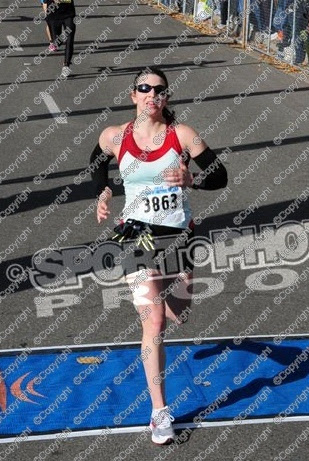

 It will only be 3 weeks of speed work, so I don't actually expect it to make THAT much difference in the 10K, but starting speed/tempo work in mid-August gives me 16 weeks of real marathon training, which is really as little as I want to do.


