Showing posts with label cool things. Show all posts

Saturday, August 20, 2016

How to tell if your base training is working.

All you need is a GPS watch (or a stop watch & a course whose distance you know) and a heart rate monitor that records data!

I think most of us would agree that endurance athletes tend to have a certain temperament, part of which is the ability to make a long-term commitment to consistently do incremental, sometimes-boring, not-necessarily-gratifying work on a day-to-day basis without much in the way of immediate feedback. Like, if you're the type of person who needs to see progress on a daily or even weekly basis, you probably won't find endurance sports very satisfying.

For the most part, I do okay with the day-to-day grunt work. I'm mostly fine with delaying gratification, but it is still nice to see some evidence that the work you're doing is accomplishing something. I get this urge even more when I'm doing nothing but slow, easy runs, I suppose because it can get soooo monotonous.

Anyway, if you come here often, you probably know that this summer has been a VERITABLE THREE-RING CIRCUS of aerobic base training up in here. Garmins! Heart rate monitors! Maaaaaaaybe breaking marathon pace + 1:30 going downhill with a tailwind!


Settle down, y'all.

I'm not going to completely rehash the whole "Why aerobic base training?" schpiel here, but you can check out the following posts if you want to read more.

Because numbers are my favorite (also because I enjoy a little validation as much as the next gal), I've been collecting data on my runs this summer & putting it all into a nifty little Excel table, plotting the date on the x-axis and my running economy (or, really, a decent proxy thereof) on the y-axis. (Units = miles per heart beat. Technically speaking running economy is about oxygen consumption, but heart rate is a pretty good indicator of that and is much easier to measure directly.)

So, after 9 weeks, what have we got?

(See this post for information on my methodology/math.)

Not bad, eh?

As you can see, the data jumps around a lot from day to day and even week to week because there are so many factors that can affect your pace & heart rate on a given day (weather, sleep, stress, medications, general fatigue, GPS issues, HRM accuracy, etc.). Because of this, you need rather a lot of data points before you can see the trend clearly.

BUT, after 9 weeks, there is a clear trend. We can have Excel calculate & plot the line of best fit (which you can see running through the data points.) Much, much cooler, though, is the fact that we can also have it calculate the variance (the number labeled R2). What is variance? Basically, it tells you what percent of the trend the x variable is responsible for. In the data above, R2 ≈ .33, which tells us that the x value (the date, ie, how many days of base training I've done) is responsible for about 33% of the variation. That means all those other things (weather/sleep/stress/GPS/HRM accuracy/etc.) account for about 67% of it.

Essentially, this is telling us that about a third of how efficiently I've run on any given day has been a result of how far into the training I am (and also that there is a lot of noise caused by other factors--weather, device accuracy, sleep, stress levels, etc.).

Now, we can't automatically assume all of that 33% is due to base training, because there are some other things connected to the passage of time besides how much base training I've done. For example, how many days of strength training I've done, or the fact that I have gradually been losing a little weight these last few weeks as my mileage has picked back up. If I wanted to be SUPER rigorous I'd have to control for all those things (which is a little impractical if you're just a normal person training to do your best at a race).

Obviously I expect to still continue getting faster as I add in speed & tempo work due to improving my VO2 max & lactate threshold, but I am curious to keep tracking this data for my easy runs to see if my running economy continues to improve between now & CIM, or if it levels off.

Want to track your own running economy (or proxy thereof)? I have a spreadsheet with all the formulas already set up which I'm happy to share with anyone who's interested. Just let me know.

Friday, September 11, 2015

Portland / Willamette Valley / Columbia Gorge

I'm always kind of conflicted about blogging about trips/vacations, because blog posts about other people's vacations are among those I tend to skip. But every now and then I will mention an upcoming or recent trip and someone will leave a comment like, "Can't wait to hear all about it!" or "Can't wait to see pics!" And of course, because I am insane, there is always a part of my brain going, But does s/he *really* want to hear about/see pics from x trip, or is s/he just being nice and/or leaving a benign comment because I left one on their post?

Which is I guess is an unnecessarily long-winded way of saying, "Here are a few photos from our recent trip to Oregon! Enjoy, and no hard feelings if you skip it!"

I downloaded everything from the memory card in my camera last night & was a little stunned to see 585 files appear in the folder titled "2015 09.02-09 OREGON." It was only eight days and I honestly felt like I was practicing a little restraint.

(Because otherwise, you know what happens. During the trip, it's all "I'll just take one more shot of this, what's the harm" and "Oooonnnnee more with a different aperature" and "Oooonnnneee more from a slightly different angle, just to be safe," but then you arrive home like I did after three weeks in Italy, download 2,000+ photos, & find yourself resigned to nothing but quiet weeping for the rest of the night.)

I'm a quality-over-quantity type of person in general, though, so please enjoy Portland, the Willamette Valley, and the Columbia River Gorge in the equivalent of a single old-school roll of film or less each.

We spent our first few days in Portland, eating & drinking all the things.


After checking in to the Bluebird Guest House (perfect!), we wandered next door to the SE Wine Collective for a bit of tasting & snacks. Both were fantastic.


SE Wine Collective


Then off to Beast for a mindblowing eight course pre fixe, including duck leg confit.


Day 2 began with The. Most. Amazing. Breakfast burrito I have ever had in my LIFE. Oh my god.
Portland is definitely winning at street food.


No visit to Portland is complete without a stop at Powell's Books!


So big you literally need a map.


Pause for refreshment just around the corner at Deschutes Brewery. So much delicious beer that doesn't make it to CA!


Once you're in a tasting frame of mind you might as well hit up the awesome folks at Clear Creek Distillery.
(I recommend the eau de vies. Actually I recommend everything.)


Home to change into nicer clothes, then a quick sour beer tasting at Cascade Brewing....


...then around the corner for one of the most incomprehensible dinners of my life at Le Pigeon. (Seriously....I can't even. You had to be there. There were some tears & one of our party may have mentioned tingling in her naughty parts.)


Smoked foie gras profiteroles from dessert. (Yes; apparently you can do that.)


After hours at Teardrop for fancy pants cocktails!


Day 3 began with coffee & donuts from Blue Star. (Far superior to the Voodoo Donuts tourist trap.)


We bid adieu to Portland with a delicious lunch at Clyde Common (including house-made Italian sodas!)

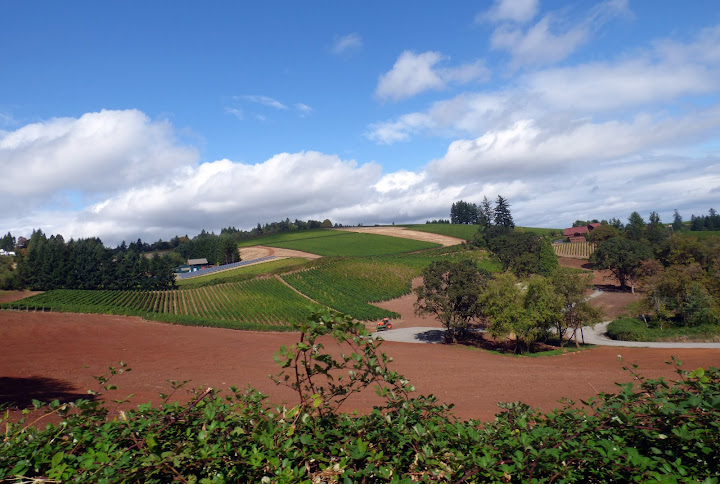
After that it was on to Willamette Valley, which is Oregon's main winemaking region.


We stayed at The Painted Lady Guest Cottage in Newberg, which is AN ENTIRE HOUSE (2 bed, 1.5 bath, & full living, kitchen, & dining rooms, plus backyard with covered patio, grill, & fire pit) which will set you back a whopping $200 A NIGHT. You can't even rent a hotel room for less than that around there!


The best part of The Painted Lady Guest Cottage is that it's about 20 feet from The Painted Lady restaurant, which serves a four-hour, nine course pre fixe that will positively ruin you for eating out for the rest of your life. (This was the pasta course. THE HAND-BRAIDED PASTA COURSE.)


Cheese course. (I'm pretty sure I never met a beet I didn't despise until this course.)


Be super nice to them & they might even walk your evening cognac, dessert wine, & other accouterments over to the guest cottage for you on a silver platter. Made of actual silver.


Next up: Let the wine tasting begin!
(Colene Clemmons)


On the road up to Domaine Drouhin Oregon


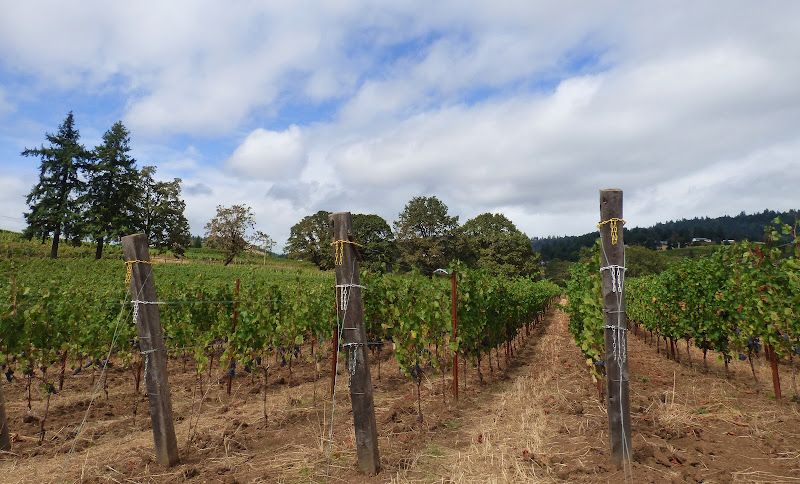
In the vines at J. Cristopher


Vidon I think? (If you want a list of solid wineries in the
Northern Willamette, just let me know. I've got you covered.)


We took time out to harass Ben Franklin on the way to dinner in McMinnville.


Pork belly & other deliciousness at Thistle.


After three days of wine tasting, nothing hits the spot like tapas & mojitos. (La Rambla, McMinnville)

After dropping our friend K at the airport, Don & I spent our last few days in the Columbia River Gorge, which is one of those places where you can pretty much point your camera in any direction and it will be gorgeous.


Bridge to Shepherd's Dell Falls


Latourell Falls


Latourell Falls


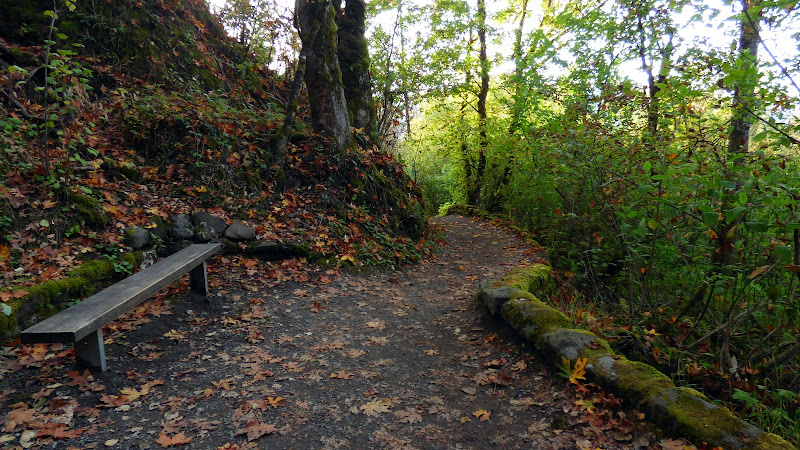
Upper Latourell Falls Loop Trail


Bridal Veil Falls


Sunset in the Gorge


Wahkeena Falls


Gorge stream on Upper Latourell Falls Loop Trail


Gorge stream on Wahkeena Falls Loop Trail


Fairy Falls


Weisendanger Falls


Weisendanger Falls


Multnomah Falls Trail


Multnomah Falls


Multnomah Falls


Behind Ponytail Falls


Behind Ponytail Falls


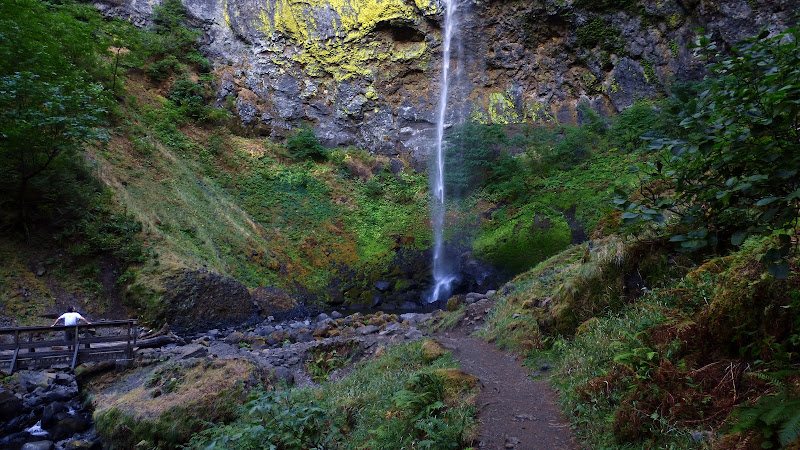
Elowah Falls


Elowah Falls


Epic Hood River sunset is epic

I thought we had a really excellent itinerary, & logistically everything worked out just about perfectly. 3-4 days of wine tasting is really plenty, but I definitely wish we'd had more days in Portland itself and maybe 1-2 more in the Gorge. I would recommend this trip to anyone who loves good food, good wine & beer, & hiking through gorgeous scenery!

Wednesday, April 29, 2015

I saw a sports nutritionist and my mind = blown.

I went to see a sports nutritionist! This post is about that. There will probably be at least a few more here & there, because HOLY INFORMATION OVERLOAD, BATMAN.

Now, you maybe thinking, "Angela. Seriously. The basics of decent eating for runners are not complicated. You are a recreational runner who rarely breaks 50 miles a week, and are so far from achieving anything even *remotely* remarkable it can't even be joked about. What even is the point?"

Short answer: I'm curious. I find the workings of bodies interesting, particularly as they relate to endurance training. In the past when I've shelled out a little money to learn from experts, I've always come away having learned something new and interesting that I hadn't known before.

Longer answer: I kind of want to try optimizing everything I possibly can as I train for Santa Rosa, just to see how it works out. In the past I've tried to learn what I can from reliable (SCIENTIFIC) sources and eat mostly pretty well in terms of running, but I've never had an expert look at what/how I eat and compare that to my life/training & give me feedback.

Also, in general I don't worry about my weight/body fat percentage--I almost never weigh myself and feel like I am totally normal & healthy--but I also know that I've drifted a good 15 pounds or so from the weight I raced best at in my younger days. If there are things I can change that aren't too onerous or complicated in order to have a better race in August, I'd like to give it a shot at least once and see what happens. And hey, I figured, worst case, s/he tells me a bunch of stuff I either a) already know or b) am unwilling to do, and then I can finally say, "Check. Now I know I'm pretty much doing everything I'm willing to." So, I made an appointment with the nutritionist at the Sports Medicine Institute in Palo Alto.

I chose SMI because they & their personnel have a solid reputation in the Bay Area endurance scene and work with many Stanford athletes as well as a number of professionals. The nutritionist has a PhD in biochemistry from Stanford and spends most of his time teaching nutrition courses at the School of Medicine & athletic department there, as well as at the medical school at UCSF, and apparently has worked with a number of big-name pros including Ryan Hall and Lauren Fleshman. (The point being not the star power, but the fact that dude is actually trained in real science and has many years of experience working with people in my sport & getting results.)

Before the appointment, he had me fill out a giant questionnaire about my training and eating habits, including information about my favorite foods, foods I don't like, anything I can't or choose not to eat, and what I eat most often and why. I tried to be as honest as possible, but I still felt a little embarrassed that under "most common dinners," I listed "pizza, burritos, Indian, Chinese, & Thai."

(Not even joking that if I had my way, it would be pizza for dinner every night. #iamtwelve)

He really stressed the importance of filling out everything as thoroughly and completely as possible and erring on the side of adding more detail rather than less and not worrying about whether something seemed relevant or not; as soon as our three-hour meeting began, it became obvious as to why. He didn't waste a single second and we still needed every minute to get through a) explaining the science to me, b) assessing my entire situation based on what I'd written, and c) putting together a program based on my activities & goals.

You guys. Oh my god.

I thought I understood about food and training and eating not-too-terribly/pretty okay. I mean sure, I knew there were finer points where my understanding wasn't great, but by & large, I felt like I had the big picture.

Lordy. I was disabused of that notion in the first 20 minutes.

I did not have the big picture. What I had were fragments of the big picture, here & there, not always the most important ones, & no understanding of how to fit them together.

To be honest, I kind of went in assuming that the takeaways would be:

  • You really have to stop (or at least cut down on) eating x/y/z (where I was pretty sure x, y, & z would be pizza, burritos, & {name of Eastern country} food), and while you're at it,
  • You should probably just eat less of everything in general, which is hard & sucks, so good luck with that, also
  • Show some damn restraint, woman.

But BEHOLD, Things For Which Dr. C Ain't Got No Time:

  • Getting people to stop eating foods they love
  • Getting people to eat "healthy" foods they don't like
  • Talk of anything even remotely like "will power" or "restraint"

He said that for years he tried promoting the "Dr. C Grocery List" with all the best & most nutritious foods he liked to see people eating, but apparently that just does not work and getting people to dump their entire way of eating and start over from scratch with things they aren't used to eating is super hard and complicated and time consuming which SURPRISE! basically sets people up for failure. "I can't even do it," he said at one point.

So instead, his approach is to start with what you already eat and like and can do easily and make small changes to fix what is for the vast majority of athletes the real underlying issue, and that is managing blood chemistry.

Yes, what you eat is important. And how much you eat matters. But far and away, the thing holding most athletes back in terms of nutrition is the timing.

For example: Our bodies absorb CHO (carbohydrate molecules) into our muscles & liver (where we store it) at a certain rate. (I hope it goes without saying that I am grossly oversimplifying, but stay with me.) As long as your body is getting CHO at that rate, you're fueling your muscles, replenishing CHO you've used up in exercise, & storing it for use in future exercise. If, however, the CHO is coming in faster than that rate, though, your body can't keep up, and the extra will get stored as fat, regardless of what the food was.

I think he said most people's baseline for sending CHO to muscles/liver is around 1 gram per minute at rest, but when you exercise, that rate increases dramatically (which is why you can have basically pure sugar during & immediately after exercise without worrying about it going to fat or messing with your insulin sensitivity). This is also why, as soon as exercise is done, the CHO you've used must be replaced immediately (ie, within ~10 minutes). At that point your body is still processing carbs & sending them to muscle/liver *really* quickly, so you can have, say, 200 calories of bread or crackers or whatever and nearly every bit of it will go to refueling.

Wait 20 minutes to have that same amount of CHO, or 40 minutes, or an hour, and your body's ability to process CHO will have dropped precipitously (by half every 20 minutes, apparently), and suddenly a quarter or a third or half of that CHO can't be processed quickly enough to get sent to your muscles, and instead will get stored as fat. So now you have a) not replaced all your lost carbs and b) gained fat unnecessarily.

Similar things happen with dinner. The problem, he said, is not that I eat pizza and Indian food and what have you most of the time. The problem is not that it's too many carbs or too much white flour or too much grease or any of that. It's that at that point in the evening my body can only absorb 1 g/minute of CHO into my muscles (which need it), and starches digest so fast that my body suddenly finds itself trying to deal with 4g/minute of CHO (or whatever, I'm making numbers up). So now my muscles are getting 25% of the carbs I eat (not enough) and the rest gets stored as (unneeded) fat.

(Also, whole grains are apparently not the answer to this, as they only slow down digestion compared to non-whole grains by about 10%.)

BUT WAIT! It gets better.

As we all know, muscle burns fat. One way to burn more fat is to gain muscle. Alas, many athletes find themselves working very hard to put on muscle and barely breaking even.

This, too, I learned, is often a result of blood chemistry in the form of unstable blood sugar. Blood sugar too low -> cortisol spikes -> cortisol starts breaking down muscle to fuel brain & keep blood sugar from falling further. So sometimes athletes are like, "Must lose fat & gain muscle! Must work out harder and create calorie deficit by eating less!" But what actually happens is that blood sugar drops, cortisol spikes, and now, in addition to having just broken your muscles down with exercise, you're doubly breaking them down by causing your cortisol to panic & cannibalize them a bit to feed your brain. GOOD TIMES!

In all likelihood, he told me, these are the main reasons why I can run 30-50 miles a week, lift weights/strength train 3x a week (ok, not lately, but in general...), spend 3 hours a week doing martial arts, eat the right number of calories from mostly healthy foods, and still be 15 pounds & several body fat percentage points over my (previous) ideal performance weight. It's apparently a very common issue, and (I'm told) actually not that complicated to fix.

The best part? When he said: "You don't have to give up pizza/burritos/{Eastern country} food."

So yeah! That's the ground work. Next time I'll talk about the changes he recommended & how it's been going. :)

Saturday, January 17, 2015

RaceRaves & a Great Contest!

Friends, I am not a big-name blogger and it's not like I find myself constantly inundated with piles of emails for promotions and giveaways. But I do get my fair share, and most of them are for products or services that I don't feel like the folks who read this blog would be that interested in or that I just cannot get behind philosophically. But recently, I've joined a site called RaceRaves (created by Jen's friends Mike & Katie!), and Mike asked if I wouldn't mind spreading the word if I was finding the site useful/enjoyable. (You can read Mike's own post about it here.)

Basically, it's a little like Yelp for races (but much less douchey). You look up a race you've run (it's a pretty good database so far & growing, and you can always request to add a race if it's not currently in there), rate it on a few different aspects (difficulty, production, scenery, etc.), and write a little review for it. (You can also add links to more detailed race reports or images if you want.) There are also options to include your time or rate your performance for a race if you want. All the races you've rated show up in your private "Staging Area" (dashboard/home page).

If you search for a race, you'll see all the reviews people have written along with its average rating, a map of its location, and historical weather data for recent years (<--BRILLIANT).

Now, this next part, I really should not tell you. But I am a good person, so I will. Until January 22nd, they are running a sweet contest with prizes that include an early bird entry to a Brazen Racing event, shoes, a RoadRunner Sports gift certificate, etc. All you have to do is join & review your races (at least one of which I think has to be a Brazen event). (Contest details here.) I still have a huge head start on most of you, so better get typing!

Also, ICYMI, I am running a race (!) tomorrow, so wish me luck. :)